Roadside, shoulder, scale, or terminal, open 24 hours
24 hour truck tire road service
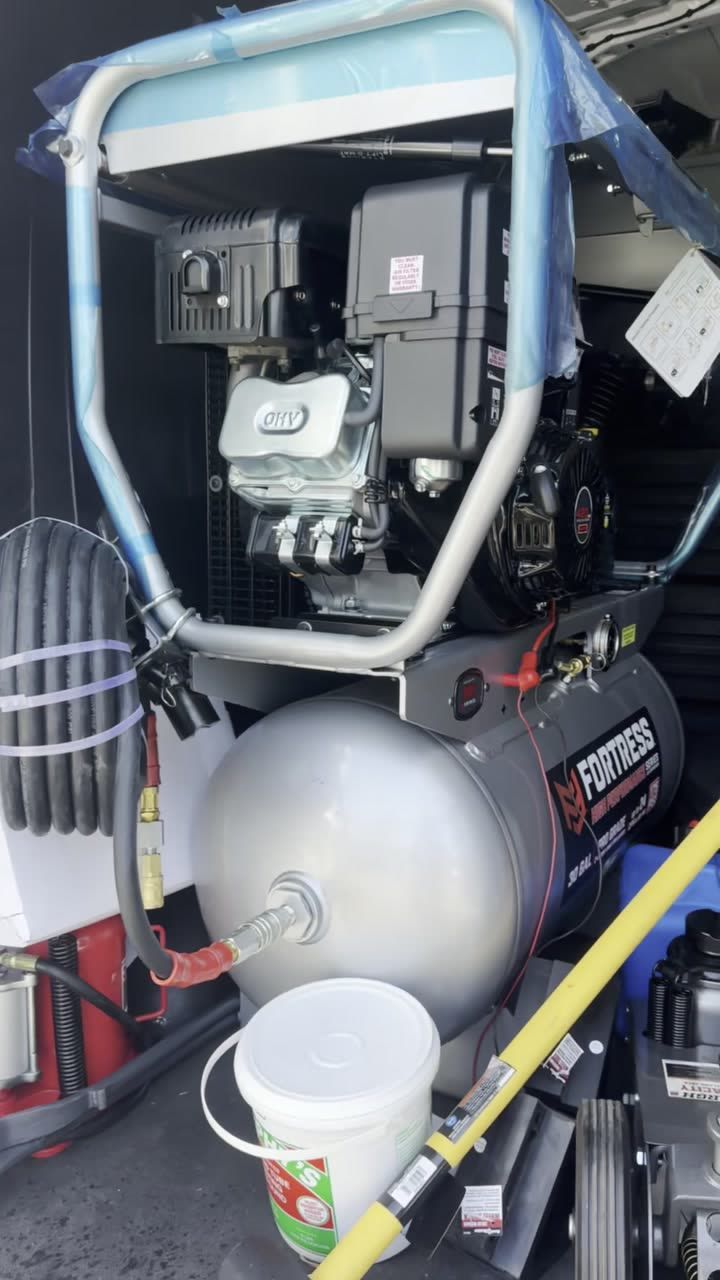
Blowout, flat, or a slow leak you found at the scale. One call, we load your size, and the van rolls with the tire, the jack, and the compressor.
Open 24 hours, every day
What happens after you call
No dispatch queue, no ticket number. You talk to the person who is going to do the work.
- Ninety seconds on the phone. Where the truck is, which position, the size on the sidewall, loaded or empty, whether it can roll. We load that size at the yard before we roll.
- You get two numbers before we move. An arrival estimate and the service call price. If it is going to be longer than that, you hear the real number, not a comfortable one.
- The right tire goes in the van. Not a second trip, not a promise to come back.
- We text when we are close so you know the headlights behind you are ours.
- Repair or replace gets said out loud with the total, before the jack goes under.
- Torqued to spec, pressure set, and you sign. You pay what you heard on the phone.
While you wait
The shoulder is the dangerous part of this job, and it is more dangerous for you than for us, because we brought a barrier and you did not.
- Get to a wide spot if the truck will roll. An off-ramp, a weigh station, a truck stop, or a lot beats a narrow shoulder. A shredded tire is already finished.
- Hazards on. Triangles out. On a divided highway that is 10, 100, and 200 feet behind the trailer, toward traffic, within ten minutes of stopping.
- Get out on the traffic-free side and stand behind the guardrail or well off the shoulder. Never between the truck and the lane.
- Leave the wheel alone. Do not start pulling lugs on a live shoulder to save time. We will not save any.
- Keep the phone on and answer an unknown number, because that is us.
Freeway service patrols in the Bay Area help stranded cars. They do not change commercial truck tires, and neither does the highway patrol.
When it is a tow, not a tire
Some of what looks like a tire problem is not one. If you describe any of these, we say so on the phone and you call a tow instead. You should not pay for a van to drive out and tell you that in person.
- A bent, cracked, or chewed rim, or a wheel that came off.
- Studs sheared or a hub that is damaged or hot enough to smell.
- Brake or bearing failure, or anything that was on fire.
- Axle or suspension damage, or a trailer sitting crooked on its springs.
- The truck is somewhere a van cannot safely work: a live lane, a blind curve, a soft or steep shoulder.
If it is a tire and something else, we do the tire and tell you plainly what still needs a shop.
Hours and after hours
Open 24 hours, every day.
The number rings the phone in the van at 3 in the morning the same as at 3 in the afternoon. Nights are quieter on the road, so an overnight call often moves faster than a Tuesday at 4 pm on 880.
Plenty of outfits advertise every hour of the day and answer weekdays only. If nobody picks up here, it is because both hands are on a wheel, and you get a call back.
Have this ready
- Location
- Highway, direction, last exit or mile marker, which shoulder. In a yard, the address and a gate contact.
- Unit
- Truck or trailer, and the unit number if your carrier uses them.
- Position
- Steer, drive, or trailer. Left or right. Inside or outside dual.
- Size
- Read it off the sidewall, something like 295/75R22.5 or 11R24.5.
- Load
- Loaded or empty, and whether the truck can still roll.
- Damage
- Blowout, slow leak, or found flat. Say if it was driven on.
Where we roll
Santa Clara, Alameda, Contra Costa, San Francisco, San Mateo, Marin counties. The Port of Oakland and the US-101, I-280, I-880, I-80, I-580, I-680, I-238 corridors, plus the yards and terminals around San Jose, Santa Clara, Sunnyvale, Milpitas, Fremont, Newark, Union City, Hayward, San Leandro, Oakland, Emeryville, Berkeley, El Cerrito, Richmond, San Francisco, Daly City, South San Francisco, San Mateo, Redwood City, Palo Alto, Mountain View, San Rafael, and Novato.
Road service questions
Are you really open at 3 in the morning?
The number on this page rings the phone that rides in the van, at any hour. If it goes to voicemail it means we are under a truck, so leave the location and the size and we call straight back. Nothing routes to a call center.
Do I need a tow instead of a tire?
Sometimes, and we tell you on the phone when we can. A bent or cracked rim, a wheel that came off, brake or bearing damage, a fire, or axle damage is a tow, not a tire. We do not send a van out to charge you for a trip that cannot fix anything.
Can you come to a weigh station or a terminal?
Yes. Scales, truck stops, rest areas, marine terminals, and private yards are all normal calls. At a terminal or a gated yard we need the gate, the unit or chassis number, and a contact who can confirm we are expected.
What should I do while I wait?
Hazards on, triangles out behind the trailer, and get behind the barrier on the side away from traffic. Do not stand between the truck and the lane, and do not start pulling the wheel yourself on a live shoulder.
Do you carry the tire, or do you have to go get one?
We bring it. We keep new and used tires in all common commercial truck and trailer sizes at the yard and load your size before we roll. Read us the full size off the sidewall when you call. If we cannot get your size, you hear that on the first call, not after we arrive.
Which areas do you cover for road service?
Santa Clara, Alameda, Contra Costa, San Francisco, San Mateo, Marin counties, including the Port of Oakland and the US-101, I-280, I-880, I-80, I-580, I-680, I-238 corridors. Outside that, call anyway. If we cannot reach you fast enough to be useful, we will tell you.
On the shoulder right now?
Parked safe and not bleeding air? Text us with where the truck is and the tire size, and we call you back.